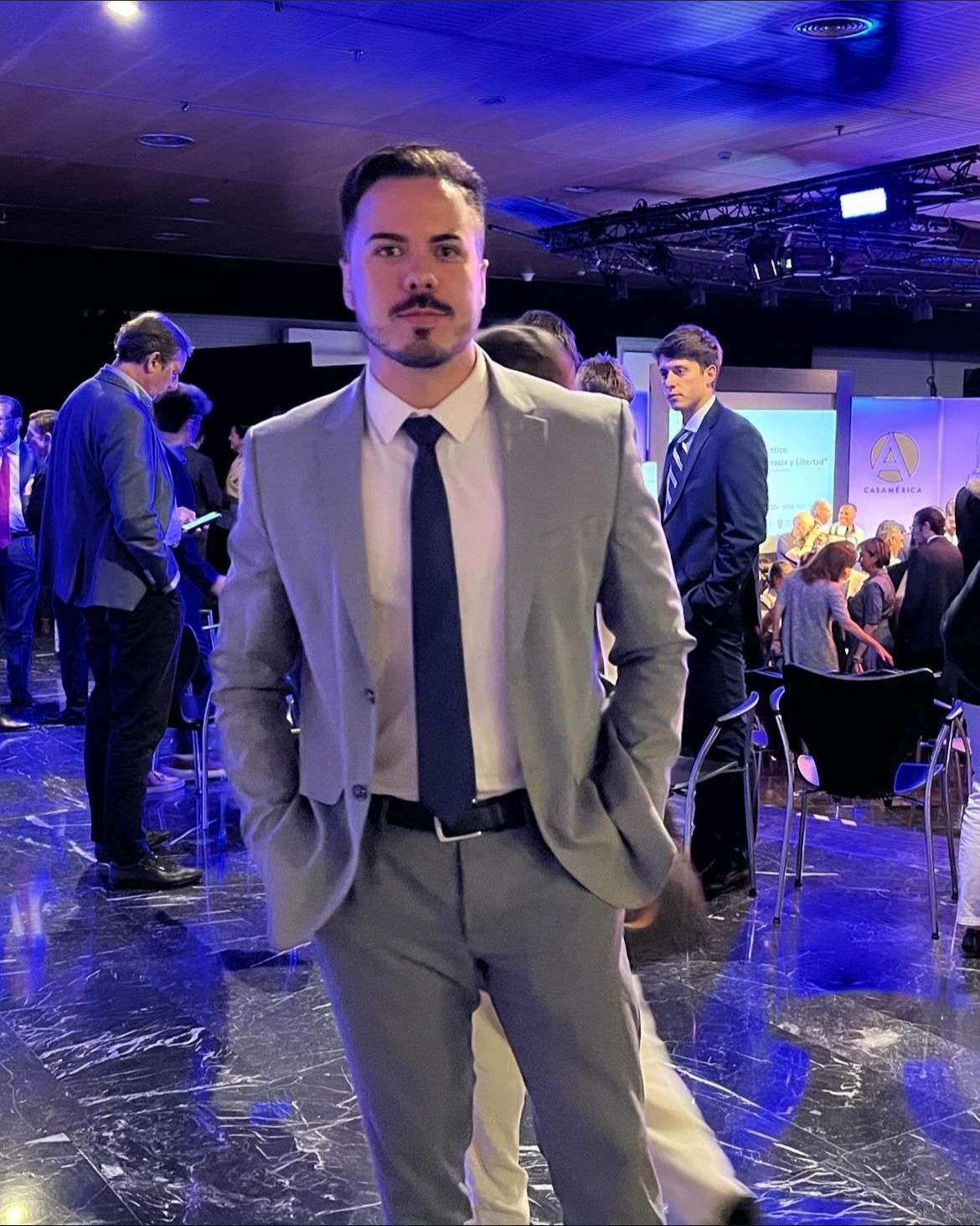
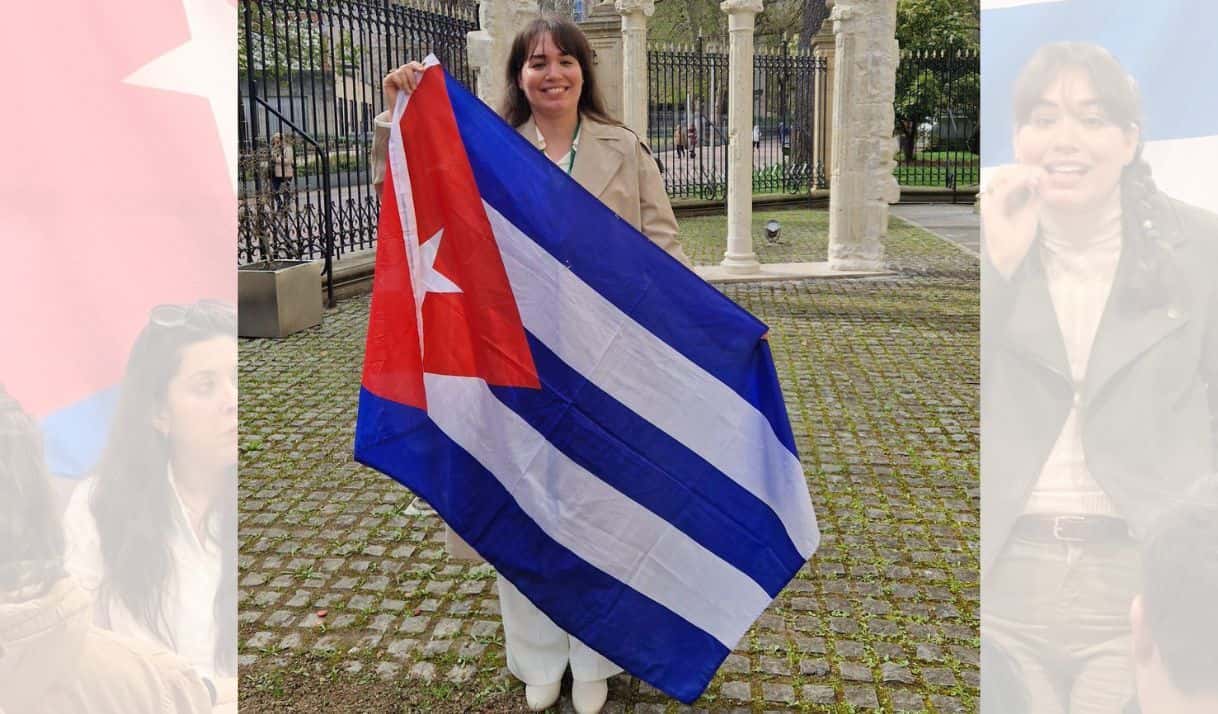
From Brussels, where she is participating in an advocacy program in favor of human rights before institutions of the European Union, Cuban activist Amelia Calzadilla reflects on her personal evolution, the role of civil society, and the possibilities for change in Cuba.
Mother of three children, Calzadilla became known in 2022 after publicly questioning the Cuban regime from the island through statements that quickly went viral on social media. Although she says she once believed in the system, her experience led her to break with that narrative and adopt a critical stance that she now maintains from exile in Spain.
“My activism has changed enormously from when I was in Cuba until now. In Cuba, I did not understand that the type of denunciation I was making was part of civil society activism seeking political and democratic change. That has been the main change. The opportunity to mature and understand how civil society organizations work, why it is so important for us to organize and structure ourselves, and how we can generate a real impact on changes inside Cuba,” she says.
To achieve that impact, she explains, activists must work together with international organizations and institutions that can help denounce the human rights violations committed in the country.
Calzadilla left the island in November 2023 after suffering threats, surveillance, and harassment. In 2024, she joined Ciudadanía y Libertad, where she works in civic education alongside Carolina Barrero. Amelia is also the training director of the Escuela de Pensamiento Cívico Gui Pérez Cisneros, which seeks to educate networks of women and young people inside Cuba so they can attain greater civic awareness.
“Based on that civic culture, they can structure themselves, organize, and increase their level of participation in society. Precisely, the purpose of the organization is to promote political participation, association, and free assembly in peaceful terms,” she says.
Regarding the current political landscape on the island, Calzadilla describes a complex scenario, marked by the loss of legitimacy of the system and the difficulties of the opposition in organizing within Cuba.
“The political panorama in Cuba is very complex. On one hand, the Communist Party has lost all popularity; on the other, the opposition is trying to organize, but it is becoming more difficult, especially inside the island, because of the high level of repression. Even so, I see one positive element. There are more people willing to participate and get involved, even amid the repression,” she says.
For her, despite the adverse conditions, “Cuba is going through a moment favorable to change” because “people have understood that they cannot leave the country’s destiny in the hands of corrupt politicians and that social and economic changes will only be possible if political structures are transformed.”
Asked about the chances of change in the short term, Calzadilla is categorical and says that scenario is inevitable.
“It is not that I see possibilities for change—I am sure it is going to happen in the short term. We have discussed this in our advocacy meetings with the European Parliament, and they also perceive that possibility. There are clear signs. Not only because of pressure from the United States, but because the system is imploding. It is such a centralized and controlling model that it has ended up sabotaging its own management and losing legitimacy before the people. That makes it unsustainable,” she says.
There are other factors that, in her opinion, are accelerating the change she predicts: lack of development, absence of real investment, deterioration of international relations, loss of income sources, as well as the crisis of the medical missions.
“Everything points to the fact that we are facing a real possibility of change. I am certain it will happen and that it will be soon, although I cannot say exactly when. Now, the big question is what will happen afterward. The priority must be to be organized, with concrete plans to restructure the country,” she maintains.
The activist believes it is first necessary to “dismantle the centralized and arbitrary structure of Castroism” and then rebuild the country on solid legal, constitutional, judicial, and economic foundations, with special attention to vulnerable groups.
“It will be a long process, which is why it is essential that civil society prepare from now on, not only to denounce, but also to rebuild the country. Cubans need the certainty that there will not be anarchy, that there will be a civil society capable of leading that process,” she emphasizes.
Despite exile, and although the expiration date of the dictatorship remains uncertain, Calzadilla sees her future on the island: “I see myself returning to Cuba, participating actively, and being more involved in the country. I hope it will be soon, so I can apply the experience I have acquired to help improve Cuba.”
This article was translated into English from the original in Spanish.


Comments
We moderate comments on this site. If you want to know more details, read our Privacy Policy
Your email address will not be published. Mandatory fields are marked with *
Todavía no hay comentarios.