
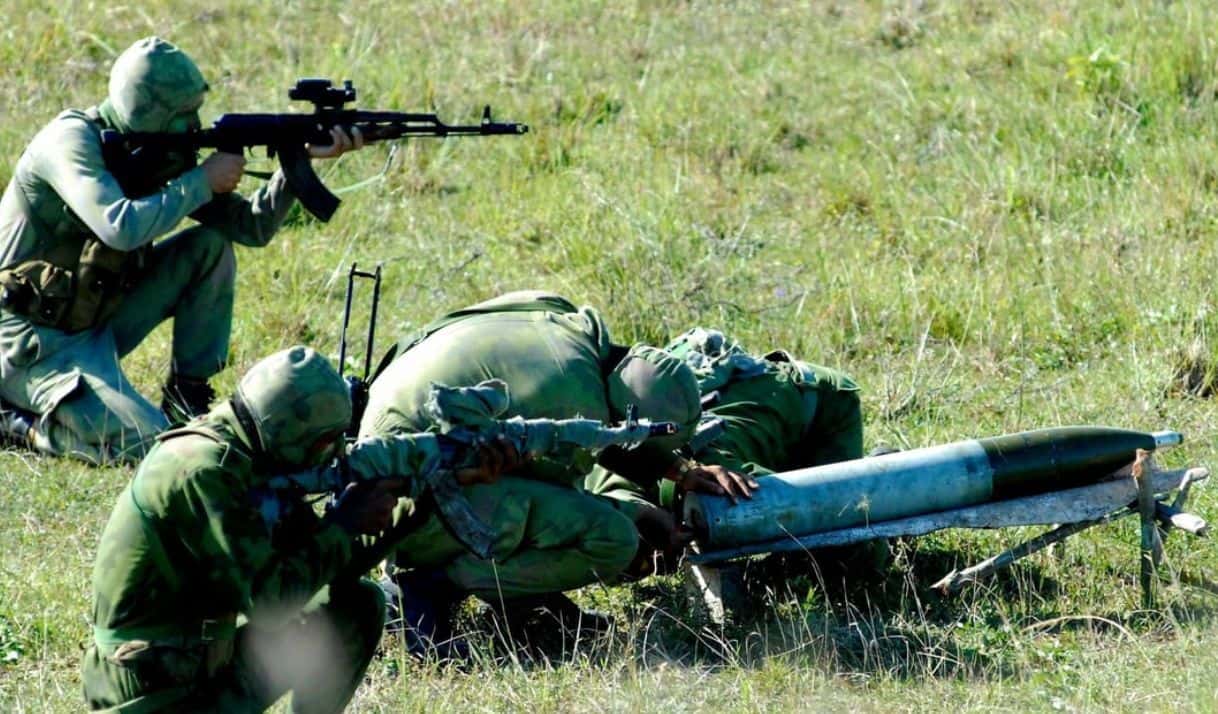
Official Cuban media circulated messages on Sunday that raised questions inside and outside the island about a possible declaration of a state of war in the country.
However, an analysis of the legal framework and reported facts makes it possible to conclude that, up to now, Cuba has neither declared a state of war nor activated the exceptional national defense regime.
One must read with caution the narrative disseminated by official propaganda. The primary goal of its communication is not to inform about concrete decisions with immediate effects, but rather to send a political message in a context of growing tension with the United States — especially after January 3, 2026.
What the Havana regime confirmed was that the National Defense Council held a meeting. According to the Constitution, that body is responsible for organizing and preparing the country for defense during peacetime. The note released after the meeting states that the decisions adopted were made with the knowledge and authorization of Raúl Castro, 94, a relevant detail that contradicts the narrative of his supposed definitive withdrawal from the strategic affairs of power.
Based on the available information, what was approved was not a declaration of war, but rather an update of contingency plans for a hypothetical scenario in which the island would have to transition into a wartime situation.
From a legal standpoint, Cuban legislation is clear. The 2019 Constitution and the National Defense Law establish that only the National Assembly of People’s Power or, failing that, the Council of State, may declare a state of war — and only in the event of an imminent aggression or an attack already underway. Neither of these conditions has been officially recognized so far.
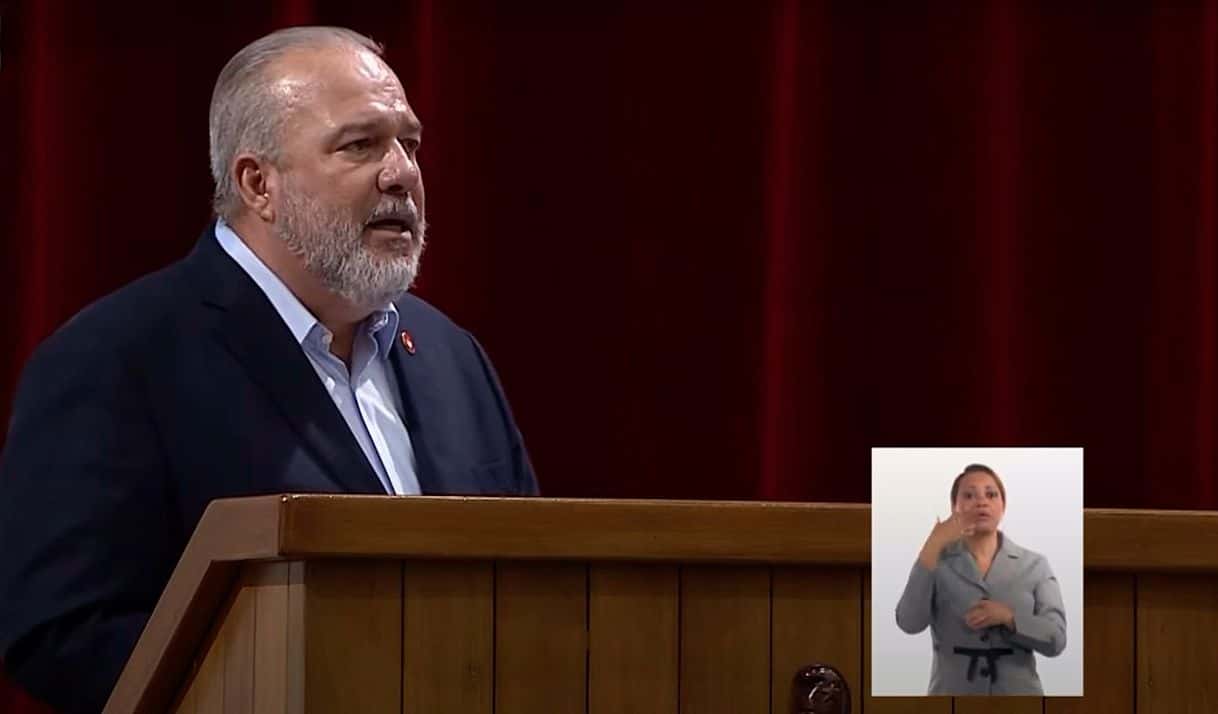
Nor has an intermediate figure provided for under the law been declared: the state of general mobilization (designed to gradually elevate the country’s combat readiness before an armed conflict). That measure could in fact be decreed by the President of the Republic, Miguel Díaz-Canel, without the involvement of other state bodies. However, it has also not been formally adopted.
The Cuban regime’s reluctance to declare states of emergency is not new. In recent years, despite facing severe crises — hurricanes, floods, health emergencies, and energy collapses — the government has avoided resorting to extraordinary legal mechanisms. Instead, it has sustained the idea that Cuba lives in “permanent exceptionality” due to US hostility, an argument that has served to justify prolonged restrictions on rights and liberties.
The recent communication from the National Defense Council is part of a warlike rhetoric aimed at projecting strength and willingness to confront. Nonetheless, beyond the official discourse, Cuba’s real military capacity appears limited to internal order control, with no evidence of sufficient potential to face a conventional conflict with a top-tier military power.
For critical observers, the emphasis on abstract plans, symbolic messages and a kind of swagger without material backing reinforces a deeper concern: that the regime prioritizes rhetorical confrontation and ideological mobilization over the search for political solutions — even when doing so may raise the human costs for the Cuban population.
The people of the island survive one crisis after another. It would be counterproductive for the Havana regime to declare a state of war in Cuba in 2026, especially given the desolate internal situation: people struggle daily to secure the most basic resources for life, while suffering prolonged blackouts, illnesses, and shortages.
It would be irresponsible to divert the country’s scarce resources to sustain a state of war — particularly when there is no material evidence of imminent aggression.
This article was translated into English from the original in Spanish.


Comments
We moderate comments on this site. If you want to know more details, read our Privacy Policy
Your email address will not be published. Mandatory fields are marked with *
Todavía no hay comentarios.